Smash Car: Robot Racing
- 4.2
- Rating
- 10.00M
- Installs
- Free
- Price
 Analysis by App-foxy
I went into Smash Car: Robot Racing expecting a quick arcade racer, but its appeal is slightly different: it mixes driving with direct combat and a transformation-focused battle loop. You are not simply trying to take the cleanest line around a track. You are also looking for chances to hit opponents, build Energy, and turn that momentum into a stronger robot form at the right moment. That makes each short session feel more active than a conventional race.
It is a free racing game from FireKula, rated for Everyone, and it has already passed ten million installs with an average score of 4.5 from around ten thousand ratings. Those figures suggest that the basic idea has connected with a broad audience, but they do not tell you whether it suits your particular taste. I found the more useful question is whether you want a simple, aggressive arcade experience or a deeper racing game built around careful tuning, realistic handling, and long-term mastery.
What to consider before choosing Smash Car: Robot Racing
The first decision is about the kind of control and pressure you enjoy. Traditional mobile racers usually focus on steering, braking, drifting, traffic, or vehicle upgrades. This game puts the emphasis on contact. The car is part of the attack plan, not merely a way to move from one checkpoint to another. If you like the feeling of bumping an opponent out of your path and immediately preparing for a transformation, the central loop is easy to understand and satisfying from the beginning.
You May Also Like

 Blood Strike: 2.5 Anniversary
Blood Strike’s Loadouts Turn Every Drop Into a Tactical Gamble
A close look at Blood Strike’s custom loadouts: how fast access to signature weapons reshapes its battle royale rhythm, rewards preparation, and narrows the gap between fights.

 Pandora - Music & Podcasts
Pandora’s Music Is Easy to Start, but Harder to Recover
Pandora’s strength is its low-effort path from a seed to a station. Its weak spot is how much confidence it asks you to place in connection, setup, and quiet recovery.

 8 Ball Pool
 Is Built on Rivalries, Rematches, and Routine
A close look at the rivalries, rematches, shared routines, and unanswered safety questions that turn a quick pool match into a persistent mobile community.

 Samsung Music
’s Quiet Strength Is Playing What You Already Own
Its reach comes less from spectacle than from dependable access to a personal library. That simplicity is both the app’s strongest retention engine and its ceiling.

 AccuWeather: Weather Radar
AccuWeather Review: A Quick, Clear Forecast for Everyday Decisions
For everyday plans, the best forecast is the one you can understand quickly. AccuWeather makes rain timing, radar, and local conditions easy to act on, with a few trade-offs.

 Hill Climb Racing
Why Hill Climb Racing Still Turns Crashes Into One More Run
A tiny car, a bumpy hill and one more upgrade: Hill Climb Racing keeps resurfacing because its simple chaos makes every near-miss feel personal.
More From Our News Desk



The second decision is how much complexity you want. I would not choose this as a substitute for a serious simulation racer. Its strongest quality is immediacy: you can start a session without first learning a large collection of tuning screens or handling techniques. That is useful when you have only a few minutes, although it also means players looking for detailed vehicle setup or realistic racing physics may find the experience too light.
The third point is your attitude toward optional spending. The game is free to download, while its in-app purchases range from $0.99 to $89.99 per item. I recommend treating that range as a reason to decide on a personal spending limit before playing rather than as a reason to avoid the game automatically. The important practical habit is to enjoy the core driving and combat first, then decide whether any purchase genuinely improves your experience.
Device compatibility is fairly approachable because the game supports Android 7.0 and later. That makes it a possible choice for people using older phones that cannot comfortably handle newer, heavier racing releases. Even so, the actual feel can depend on the phone’s performance and controls. I prefer playing with enough screen space to keep steering and attack actions comfortable, especially during crowded moments when a small mistake can send the car away from the best target.
The basic loop is easy to grasp, but timing matters
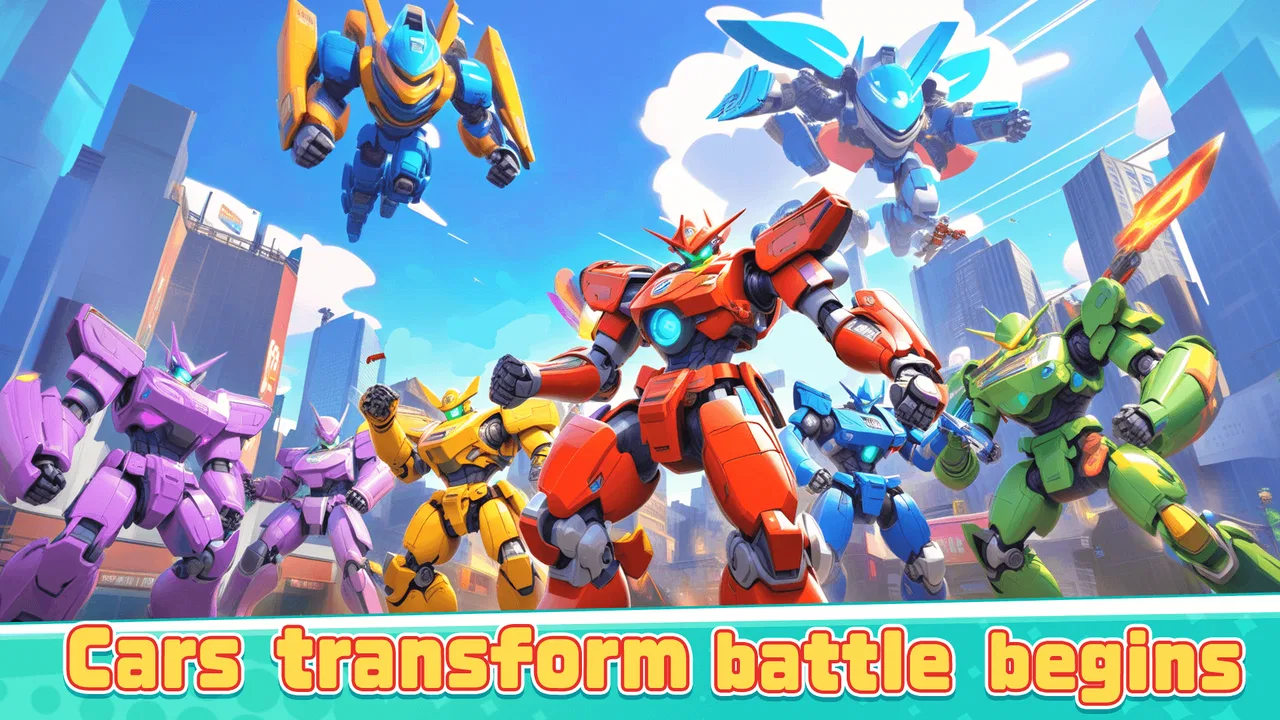
At the heart of a session is a simple sequence. You drive, look for opportunities to smash enemies, gather Energy through the action, and use that charge to trigger the game’s Auto-Transform behavior. The transformation gives the race a second rhythm: the opening moments are about positioning and building momentum, while the later moments feel more like a robot battle where the value of an attack depends on when you use it.
That timing is the first non-obvious lesson I took from playing. Charging Energy is not just a background task to complete as quickly as possible. If you chase every opponent without considering your route, you can lose control of the race itself. I got better results when I treated attacks as part of my driving line: approach a target without abandoning the direction I needed, make contact, then return attention to the next safe path instead of continuing to collide randomly.
The Auto-Transform system also changes how I think about mistakes. In an ordinary racer, a bad corner can be corrected by braking or finding a new line. Here, a poor approach can cost both position and the chance to build Energy efficiently. I found it more useful to accept a missed attack and reset my route than to force a second collision from an awkward angle. That small adjustment makes the game feel less chaotic without removing its arcade character.
Why the combat focus makes it stand out
The best part of the design is that racing and fighting are connected rather than presented as two unrelated modes. A car that only tries to avoid everyone is not using the game’s main identity, while a player who attacks without watching the road can waste the advantage. That tension gives the short races a clear decision point: do I stay on the safest route, or do I take a risk to reach an opponent and build my charge?
I particularly like this structure for casual sessions because it creates a goal beyond simply finishing first. Even when a race does not go perfectly, a well-timed hit or a successful transformation can make the attempt feel worthwhile. The game is therefore more forgiving emotionally than a pure leaderboard racer, where falling behind early can make the rest of the session feel pointless.
It is also a good fit for players who enjoy robot themes but do not want a separate strategy game. The transformation is not something I have to plan through a long turn-based system. It arrives inside the action, which keeps the focus on movement and impact. That makes the game easy to show to a friend: the premise is visible almost immediately, and the difference between ordinary driving and robot combat is easy to understand.
Practical habits that improve the experience
My first recommendation is to avoid holding a single objective in mind for the whole session. Instead of thinking only about winning, I use a short cycle: find a clean route, identify a reachable enemy, make one deliberate attack, and then reassess. This keeps the screen from becoming a blur of collisions and helps preserve control after a successful hit.
My second tip is to learn the spacing around opponents before trying to attack constantly. A direct smash is tempting, but approaching from the wrong angle can turn a promising move into lost distance. I found that patient positioning is more valuable than frantic steering. The game remains fast, but the player who can wait for a better contact often gets more from the same opportunity.
Third, I would play the first sessions without thinking about purchases. That gives you a clearer idea of whether the combat loop itself is enjoyable. If you already know that you dislike arcade collisions or automatic transformation systems, spending money will not solve that mismatch. If the loop works for you, you can then judge optional items as convenience or extra enjoyment rather than as a requirement to discover whether the game is fun.
A fourth useful habit is to choose your playing environment carefully. Because the game depends on quick steering and visual reactions, a cramped or distracting setting makes the combat feel less fair than it really is. I prefer short sessions when I can keep both hands steady and see the action clearly. That is especially relevant for younger players, even though the Everyone rating makes the game broadly accessible.
Where Smash Car: Robot Racing wins, and where another racer may fit better
I find the choice comes down to what you want each race to make you think about: this one rewards balancing a clean route with well-timed contact, while a more conventional racer may suit you better if precise laps or vehicle tuning are the fun part. I’d use that distinction to judge whether its unusual loop will keep feeling fresh after the first burst of novelty.
Its strongest advantage is immediate variety
Compared with a standard arcade racer, this game gives every encounter an extra layer. You are not only asking whether you can pass a rival; you are also considering whether the collision helps your Energy and brings the robot phase closer. That makes the driving feel more eventful without requiring a complicated explanation. For me, this is the main reason to choose it over a conventional car game when I want action rather than a quiet time-trial mood.
It also works well for players who get bored with races that feel too clean. The possibility of smashing enemies creates a more physical atmosphere, and the Auto-Transform feature gives the session a recognizable payoff. I would recommend it to someone who likes racing games but often loses interest once the basic steering is understood. The combat objective gives that person another reason to stay engaged.
The game’s free entry point is another practical strength. You can try the central idea before committing to a purchase, and the broad age rating makes it suitable for mixed-age households that want something more energetic than a puzzle but less demanding than a serious competitive racer. FireKula has kept the premise direct, which helps the game work as an easy pick-up-and-play option.
Where a different category of racer is a better choice
I would point a dedicated simulation fan elsewhere. If your favorite part of racing is adjusting a vehicle, learning realistic braking points, managing tire behavior, or improving through precise lap consistency, the robot-battle focus may feel distracting. This is a game about impact and transformation, not a substitute for a detailed driving simulator.
It may also disappoint players who want a long, quiet progression built around collecting and customizing a garage. The appeal here is the action loop, so someone choosing a game primarily for deep vehicle ownership should compare it with a collection-focused racer instead. I would make the same distinction for players who prefer online competition built around rankings and careful matchmaking. Nothing about the basic concept promises that kind of structured racing experience, so it is better to choose according to the type of competition you actually want.
There is another trade-off for players who dislike automatic systems. Auto-Transform is convenient because it removes a layer of manual management, but some players may prefer to decide every stage of a transformation themselves. I see the automatic approach as part of the game’s accessible design; still, if control over every combat state is essential to your enjoyment, a more technical action racer may be a better match.
The purchase range deserves a second look from families. A free download is convenient, but the presence of individual purchases from $0.99 up to $89.99 means I would not hand the game to a child without checking the device’s purchase protections. That is not a criticism of the driving loop itself. It is simply a sensible boundary between a game that is easy to try and a game that should be played with spending controls in place.
A realistic everyday use case
Imagine having a short break between errands or waiting for a friend. A long simulation race may be inconvenient because it asks for concentration and a larger time commitment. A conventional endless racer may be easy to start but can feel repetitive if you want a clear burst of action. This game sits between those choices: I can launch it for a quick round, focus on smashing a few opponents, and use the Energy objective to give the session a sense of direction.
On the other hand, I would not choose it for a relaxed evening when I want to listen to something and play almost automatically. The collision-focused design rewards attention, and careless steering can undermine the very attacks that make the game interesting. It is also less suitable for someone who wants a calm visual experience or a methodical racing lesson. The right use case is active, short-form play rather than passive background entertainment.
What switching costs you should expect
Moving from a conventional racer to this game does not require learning an entirely new genre, but it does require changing your priorities. In a normal race, avoiding contact may be the safest instinct. Here, contact can be valuable, so you have to learn when aggression helps and when it damages your route. The transition is straightforward, yet players who have trained themselves to avoid every rival may initially feel that the game is rewarding behavior they usually consider a mistake.
Switching in the other direction has a similar cost. If you leave this game for a simulation racer, you may need patience for slower progress and more precise control. If you move to a vehicle-collection game, you may miss the immediate Energy-and-transformation target that gives each encounter urgency. In my view, the cost is not technical difficulty; it is giving up a specific kind of instant feedback.
The current version is 1.2.4, and the game was released on June 9, 2025. Those details are useful when checking compatibility and deciding whether the title fits your expectations as a relatively recent mobile release. I would still judge it primarily by the feel of its central loop, because a version number cannot tell you whether smashing, charging, and transforming are the kind of repetition you personally enjoy.
My recommendation for different players
I recommend Smash Car: Robot Racing to players who want a free, accessible racing game with a clear combat hook. It is especially appealing if you enjoy short sessions, physical collisions, robot themes, and the satisfaction of building toward a visible transformation. The game is easy to explain, quick to sample, and more distinctive than a basic racer that only asks you to stay on the road.
I would recommend it with more caution to parents and younger players because the Everyone rating makes the content approachable, but the in-app purchase range still deserves adult oversight. Set spending limits before play, and let the player decide whether the core loop is enjoyable without purchases. That approach keeps the decision focused on the actual game rather than on pressure to buy.
I would skip it if your priority is realistic handling, extensive tuning, quiet time trials, or a highly structured competitive scene. A more specialized racing game will serve those needs better. The same applies if you dislike automatic transformation mechanics or find repeated collisions irritating rather than entertaining.
For me, the final verdict is positive because the game knows what it wants to be. It is not trying to replace every kind of mobile racer. Instead, it offers a compact arcade experience where driving, smashing, Energy, and robot transformation support one another. If you want racing to feel like a quick battle rather than a clean lap, this is a worthwhile free download to try.
My advice is to play several sessions before considering any optional purchase. Pay attention to whether you enjoy planning attacks, recovering after a missed collision, and choosing the right moment to let the action build toward Auto-Transform. If those decisions keep you engaged, FireKula’s game has enough personality to earn a place in your rotation. If you are looking for precision simulation or deep garage management, save your time and choose a racer built around those strengths instead.
FAQs for Smash Car: Robot Racing
01What is Smash Car: Robot Racing about?
Smash Car: Robot Racing is a thrilling mobile game that combines high-speed racing with action-packed robot battles. Players can customize their vehicles, engage in intense races, and battle against other robots. The game offers a unique blend of racing and combat, creating an engaging experience for racing enthusiasts and action lovers alike.
02Is Smash Car: Robot Racing free to play?
Yes, Smash Car: Robot Racing is free to download and play on both Android and iOS platforms. However, the game includes in-app purchases that allow players to enhance their gameplay experience by unlocking special vehicles, upgrades, and other premium features. These purchases are optional and not necessary to enjoy the game.
03What are the system requirements for Smash Car: Robot Racing?
Smash Car: Robot Racing requires a device running Android 5.0 or higher, or iOS 10.0 or later. It is optimized for both tablets and smartphones, but a device with at least 2GB of RAM is recommended for the best performance. Ensure you have sufficient storage space before downloading the game.
04Does Smash Car: Robot Racing have multiplayer features?
Yes, Smash Car: Robot Racing includes a multiplayer mode that allows you to compete against friends or players worldwide. You can join races, participate in tournaments, and climb the leaderboard to showcase your skills. The multiplayer mode enhances the competitive aspect of the game, offering endless replayability.
05How can I customize my car in Smash Car: Robot Racing?
In Smash Car: Robot Racing, players can customize their cars with a variety of upgrades and visual enhancements. You can modify your car’s speed, armor, and weaponry to improve performance in races and battles. Additionally, there are numerous aesthetic options available to personalize the look of your vehicle, making it uniquely yours.
Pros
- Impressive graphics and smooth animations.
- Wide variety of customizable cars.
- Intuitive controls for easy gameplay.
- Exciting and diverse racing tracks.
- Multiplayer mode enhances competition.
Cons
- In-app purchases can be costly.
- Occasional ad interruptions.
- Requires constant internet connection.
- High battery consumption during play.
- Some features locked behind paywall.

Smash Car: Robot Racing
Gallery